Research
🦠 Rationally Designed Consortia (RDC) to Prevent C. difficile Infection
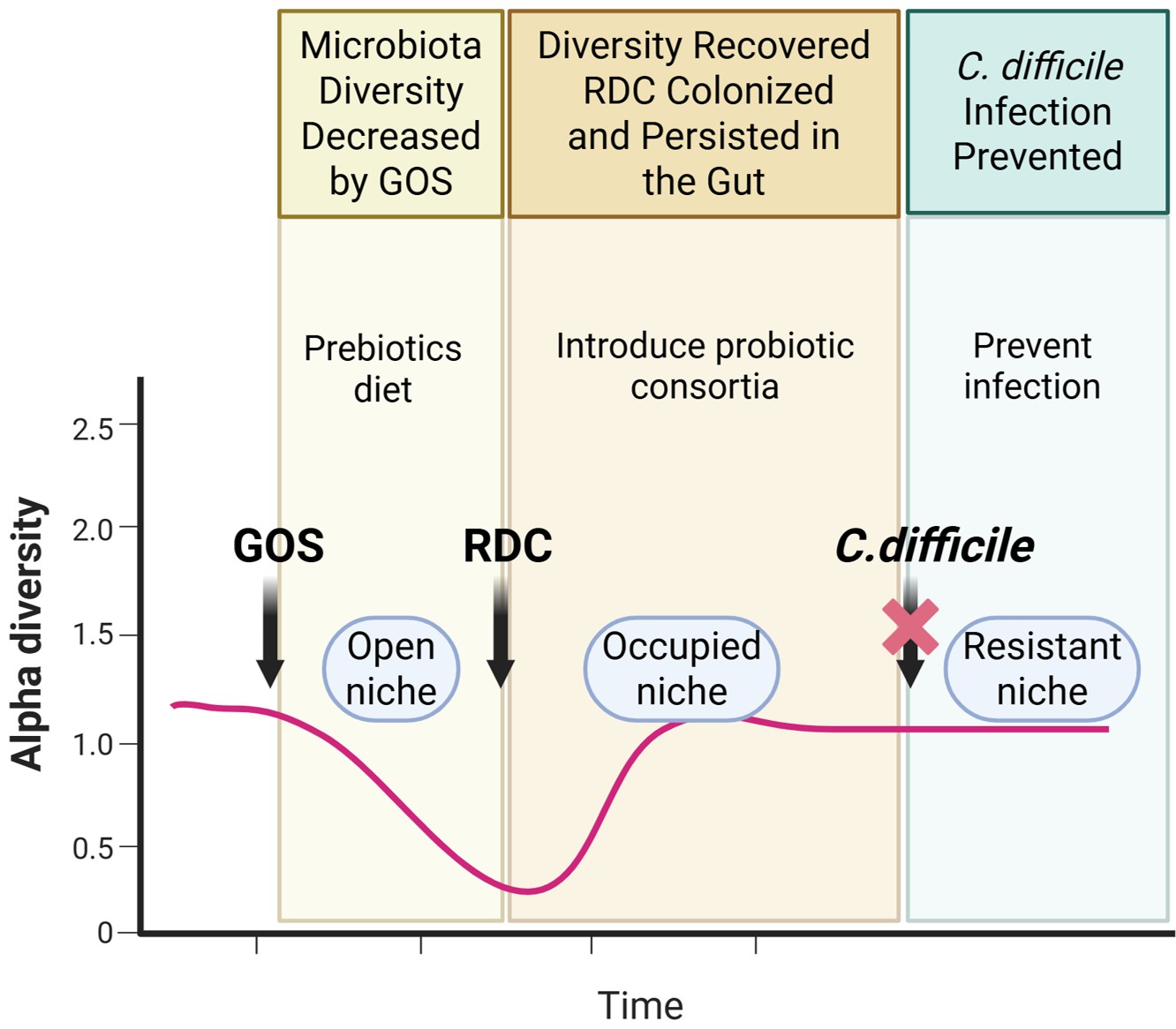
The gut microbiome is a competitive ecosystem where timing, nutrient availability, and community structure shape colonization success. Our group engineered a Rationally Designed Consortium (RDC)—a defined, sequenced, and highly cohesive microbial community developed in prebiotic-fed bioreactors.
Aging disrupts intestinal barrier integrity and weakens colonization resistance, increasing susceptibility to C. difficile infection (CDI). We found that GOS and hGOS create nutritional niches that enhance RDC persistence while suppressing C. difficile growth. In mouse models, GOS + RDC significantly reduced pathogen burden.
Key goals:
- Test synbiotic (GOS/hGOS + RDC) protection across age groups
- Determine how prebiotics reshape microbial competition and nutrient use
- Develop mechanistic foundations for next-generation synbiotics for CDI prevention
🧬 Prebiotic-Driven Dynamics of Lactobacillus Co-Cultures
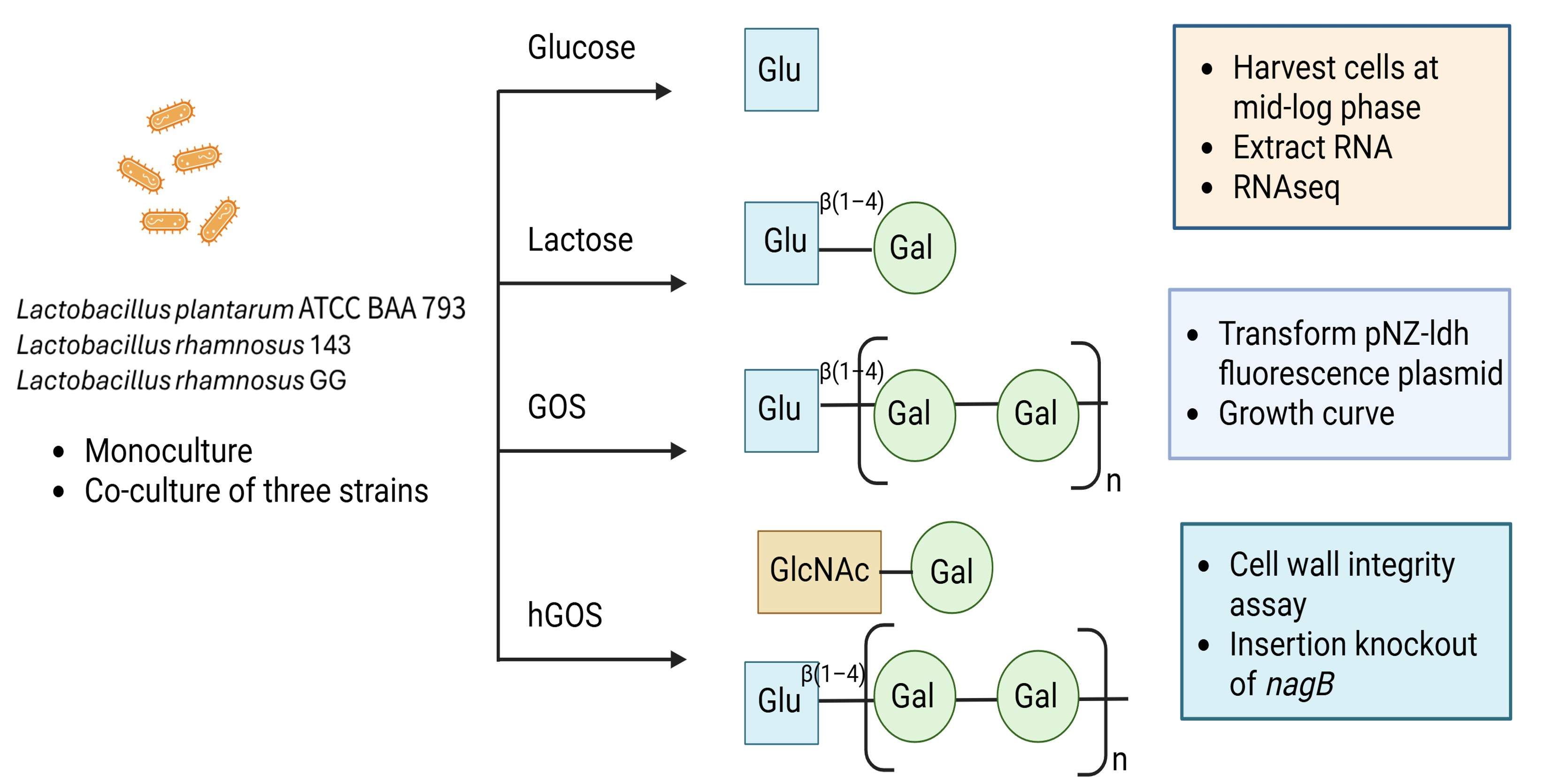
Probiotics such as Lactobacillus interact dynamically within microbial communities. We examined how different carbohydrates—glucose, lactose, GOS, and humanized GOS (hGOS)—shape the growth and competition of three fluorescently labeled strains: LGG, AMC143, and L. plantarum (Lp).
Lp dominated co-cultures with fast growth rates in GOS and hGOS, while LGG and AMC143 grew more slowly. hGOS uniquely induced nagB upregulation in LGG, improving tolerance to lysozyme and mechanical stress. These results reveal carbohydrate-specific competitive advantages and stress responses.
Implications:
- Strain-specific metabolism shapes fitness and coexistence in co-culture
- Carbohydrate structure can be leveraged to tune probiotic function and resilience
- Findings guide synbiotic design for targeted microbial modulation
🧫 How Prebiotics Remodel Intestinal Mucus and Barrier Function
The colonic mucus layer forms a critical barrier that separates microbes from the epithelium. Aging reduces mucus thickness and alters glycan composition, contributing to inflammation and increased susceptibility to pathogens.
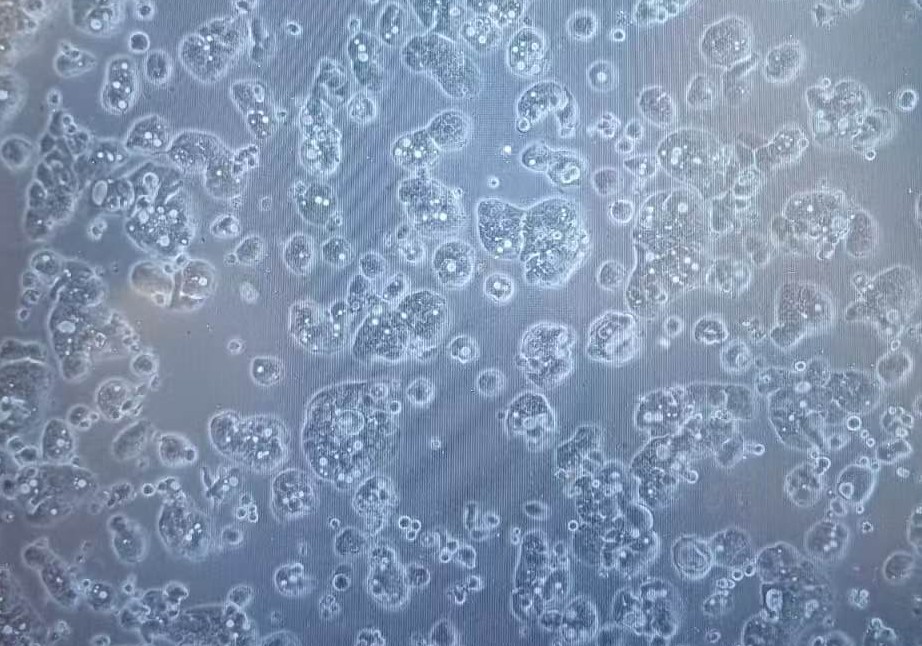
We investigate how GOS and hGOS regulate Muc2 production, mucus architecture, and O-glycan profiles using both in vitro (HT29-MTX, primary monolayers) and in vivo mouse models. Our work aims to determine how prebiotics enhance barrier integrity and facilitate beneficial bacteria colonization.
Focus areas:
- Quantification of mucus secretion and goblet cell responses
- Changes in O-glycan motifs that support beneficial bacterial adhesion
- Mucus–microbiota spatial organization (histology + FISH)
🍶 Microbial Ecosystems in Chinese Liquor Starter Daqu Fermentation
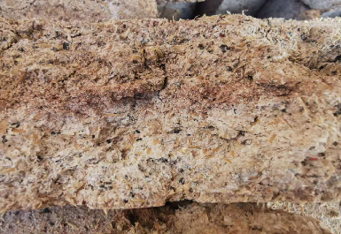
Before moving into gut microbiome work, I studied the microbial communities that drive traditional Chinese liquor (Baijiu) fermentation. Light-flavor Baijiu relies on low-temperature Daqu bricks as the fermentation starter, which provide a complex inoculum of bacteria, yeasts, and filamentous fungi.
In this project, we compared three types of light-flavor Daqu—Houhuo (HH), Hongxin (HX), and Qingcha (QC)—that differ mainly in their manually controlled incubation temperature profiles. Using amplicon sequencing of bacterial 16S rRNA and fungal ITS regions together with 1H NMR metabolomics, we characterized how temperature shaping during incubation structures both the microbiome and the metabolite landscape of these starters.
Highlights:
- Revealed how manual temperature control during Daqu incubation shapes bacterial and fungal communities
- Integrated microbiome sequencing with NMR-based metabolite profiling to link taxa with flavor-related metabolites
- Provided a framework for more controlled design and management of traditional solid-state fermentation starters